
KBS News: “Inappropriate Language and Poor Record Management Amid Adoption Delays… (NCRC) Bows Head.”
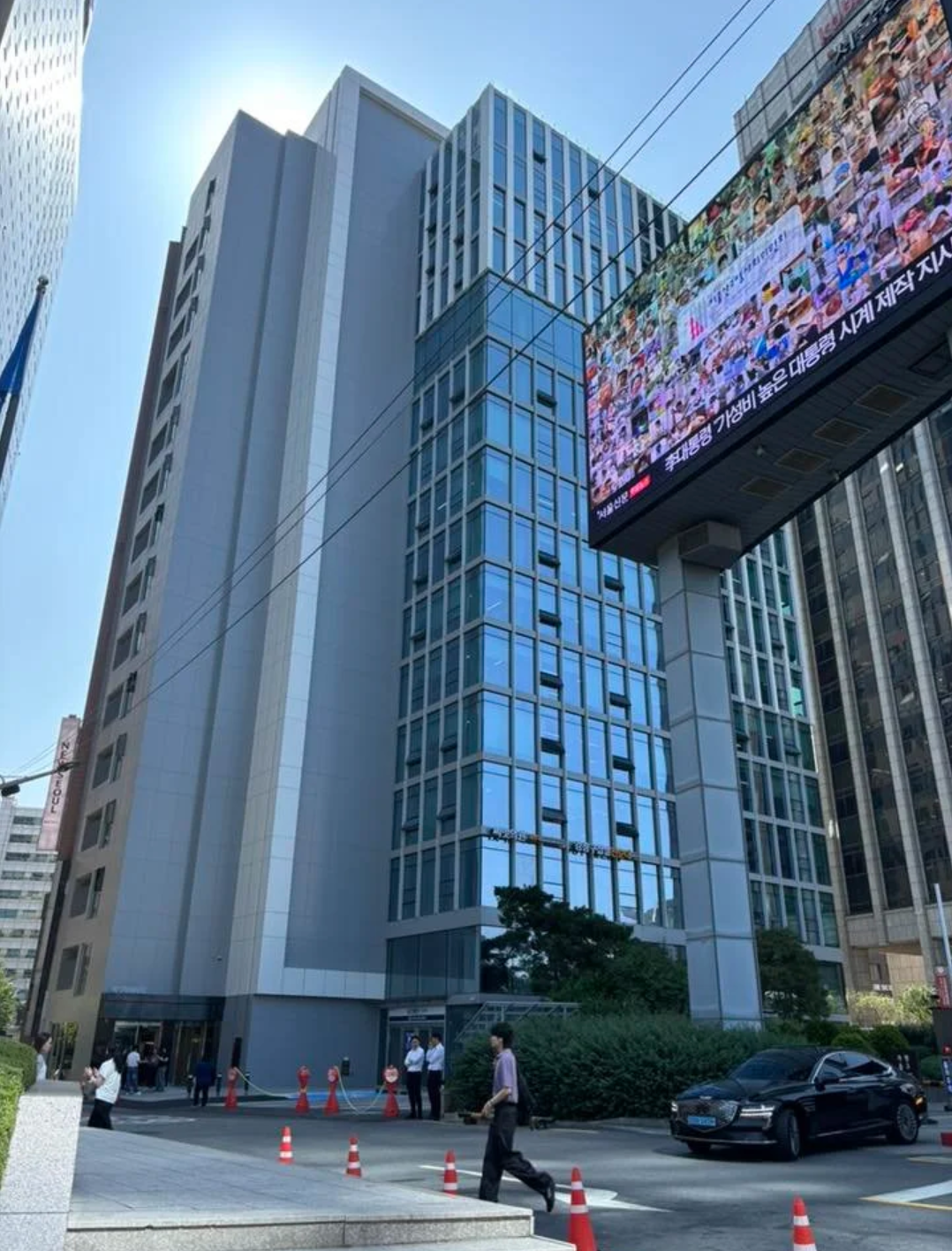
Above: NCRC’s main office in Seoul.
Image credit: Paperslip.
Posted to Paperslip on April 1st, 2026.
Translation via ChatGPT.
BOLDS and blue highlighting ours.
Thanks to a Paperslip Contributor for the link..
In-depth K
Inappropriate Language and Poor Record Management Amid Adoption Delays… Korea Adoption Services (NCRC) Bows Head
Published: April 1, 2026 (16:24)
“Since the introduction of the “public adoption system,” under which the state takes responsibility for adoptions, controversy has intensified over domestic child adoption procedures not being properly handled.
In addition, criticism has emerged that an employee of the National Center for the Rights of the Child (NCRC) used inappropriate words while explaining procedures to prospective parents and failed to properly manage adoption records.
The National Center for the Rights of the Child and the Ministry of Health and Welfare have now responded to the recent controversy.
■ Controversy Over Terms Like “Volume” and “Depletion”… Emergency Personnel Committee to Be Held
The problematic remarks were made at a National Assembly briefing on the 16th of last month.
While explaining delays in adoption procedures, a senior official of the National Center for the Rights of the Child said, “I think I need to talk a bit about the volume,” referring to children waiting for adoption and prospective parents as “volume.”
Although the official immediately apologized after backlash from prospective parents, just minutes later they again used inappropriate language, saying, “Once 100 (children) are depleted, the number of waiting parents will increase significantly.”
Kim Seong-suk, Vice President of the National Center for the Rights of the Child, said at a briefing today (April 1), “We acknowledge that the wording was insensitive and that the choice of words was inappropriate,” and added, “We will hold an emergency personnel committee tomorrow to comprehensively review the circumstances of the remarks.”
She also explained, “Such expressions are absolutely not used internally toward children or parents,” and said that improvements to internal guidelines will be pursued to align with children’s rights.
■ Zero Domestic Adoptions… “We Will Reduce Waiting Time to One Year”
The real problem facing the National Center for the Rights of the Child is the delay in adoption procedures.
Since the public adoption system was introduced in July last year, not a single newly applied adoption has been completed.
Lee Sang-jin, Director of Population and Child Policy at the Ministry of Health and Welfare, said, “We take seriously the fact that delays have occurred following the full reform of the public adoption system,” and added, “We will continue to push for procedural improvements.”
Currently, the adoption process involves receiving applications from prospective parents, providing education, conducting home environment investigations, individual qualification screenings, and court reviews in a step-by-step manner.
Lee explained, “In the early stage of the system reform, demand temporarily concentrated, causing procedural delays,” and added, “Even under the previous private-centered adoption system, it was found that the average time to complete the process was 551 days.”
He continued, “To minimize unnecessary waiting, we will expand online applications and basic education, and improve regional access to education.”
Applying online for adoption shortens document submission periods, and increasing personnel for home studies and education for prospective parents is expected to reduce waiting times.
Lee said, “If we minimize expected waiting times, it is estimated to take about one year.”
■ Adoption Records Transfer Still Facing Challenges… Disinfection Work to Begin
The task of entrusting and preserving adoption records at the National Archives has not even properly begun.
There are approximately 240,000 adoption records, which include adoption documents, films, and even umbilical cords of adopted children.
After reforming the public adoption system, the government transferred adoption records from private institutions to the National Center for the Rights of the Child and set up a temporary storage facility in Goyang, Gyeonggi Province, but concerns about preservation have been continuously raised.
Lee Sang-jin, policy officer at the Ministry of Health and Welfare, explained, “If a fire occurs, the sprinklers will activate, which could damage the records,” and added, “Last October, we signed a business agreement with the National Archives to cooperate in entrusting and preserving the records.”
However, before the records can be moved to the storage facility, disinfection work is required, which involves selecting a company through a public bid and carrying out the disinfection process.
Yoon Jang-yeol, head of the Ministry’s adoption policy team, stated, “At this stage, it is difficult to say how long the disinfection will take,” and added, “We will complete it as soon as possible.”
■ 1,600 Information Disclosure Requests from Adoptees… Difficult to Determine Lost Records
Digitization work is facing difficulties just as much as the record transfer.
Since 2013, the National Center for the Rights of the Child has been gathering scattered adoption records from private institutions and digitizing them, but in practice, some external hard drives containing digitized data were lost, indicating that the work was not properly carried out.
Kim Seong-suk, Vice President, said, “We sincerely apologize for the poor management of the digitization project over the past 10 years,” and explained, “We are considering discarding previous work entirely and digitizing again.”
According to the agency, external hard drives completed between 2015 and 2019 were sometimes mixed with other work, which led to incorrect information being included.
Kim added, “Whether adoption records were truly lost will be subject to a strict investigation by the Personal Information Protection Commission and a possible agency-led inquiry,” noting, “It is difficult to confirm the number of lost records per individual.”
About 1,600 adoptees have submitted information disclosure requests to verify their adoption records.
Given this, the agency cannot easily escape responsibility for its negligent management of records, which are supposed to be provided accurately and promptly.
Kim Seong-suk explained, “We can provide information with the consent of the biological parents, but sending it via registered mail alone takes six weeks,” and added, “We are piloting a system to first provide de-identified records.”’
■ How to Report
KakaoTalk: Search for “KBS Report” and add the channel
Phone: 02-781-1234, 4444
Email: kbs1234@kbs.co.kr
Subscribe to KBS News on YouTube, Naver, and Daum