
Trigger Warning: Beobachter Article: “How Terre des Hommes used babies for experiments.”
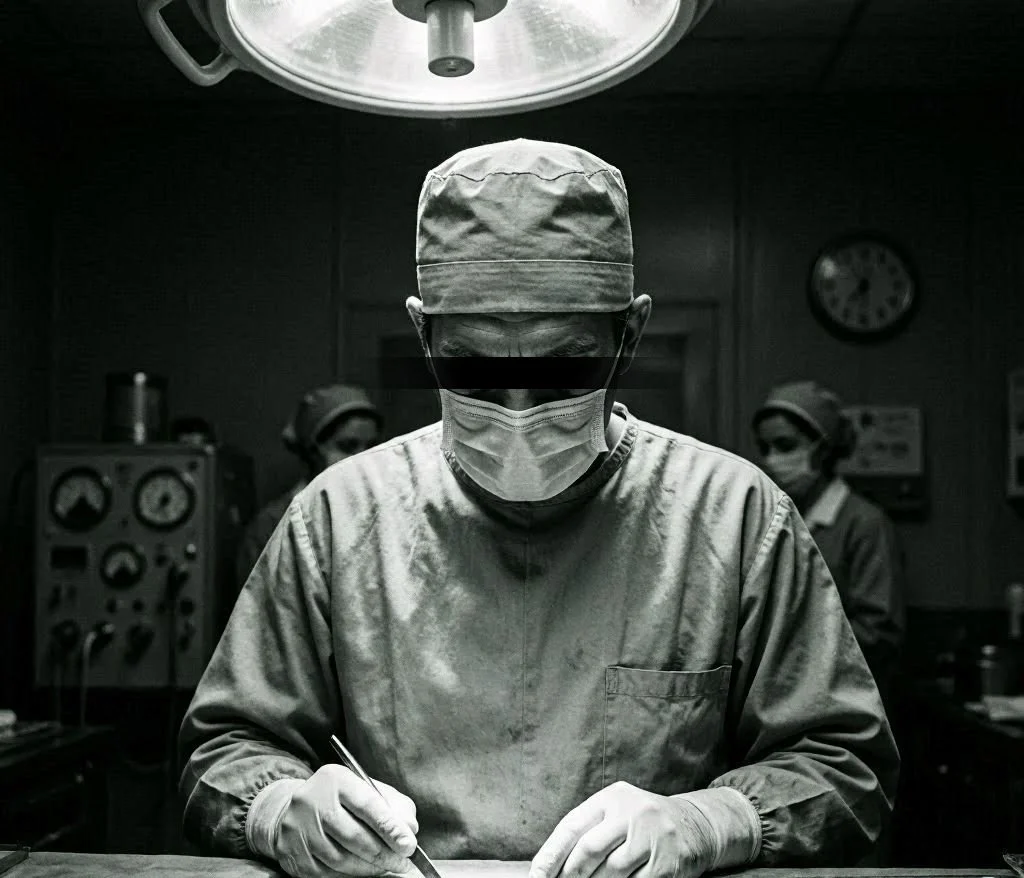
Image credit: AI generated image by Paperslip.org
Paperslip Note:
KSS (Korea Social Service) sent Korean children to Switzerland through its Partner Western Adoption Agency “Terre des Hommes” between 1968 - 1978 or 1979.
*Please note that there are only two named Korean Adoptees in the article below. From public media, we know that BOTH Korean Adoptees mentioned in the Beobachter article — Béatrice Aubert and Ilona Wyrsch — were adopted through HOLT, not KSS. This does not mean, however, that KSS children could not possibly have been affected.
Please note that we do not know exactly why KSS ended its partnership with Terre des Hommes in 1978 or 1979. But it stands to reason that it could have related to these Swiss experiments in some way.
This is purely speculation about why the partnership between KSS and Terre des Hommes ended. We simply do not know the exact reason, nor even the exact end date of their partnership.
It would unfortunately not surprise us in the least if KSS designated certain children with known heart conditions to be sent to Switzerland through its Partner Western Adoption Agency Terre des Hommes, if Terre des Hommes made a specific request for such children, or even paid KSS to do so. This is purely speculation on our part, based on what we know of the shady dealings between KSS and its other Partner Western Adoption Agency, Adoption Center (AC) of Denmark. Shady dealings between KSS and Adoption Center have been documented over the past few years in the press.
We are sure that there were many aspects to the dealings between KSS and its various Partner Western Adoption Agencies which we do not know.
We do not know what transpired in the partnership between KSS and Terre des Hommes behind the scenes.
KSS operated its overseas adoption business between 1964-2012.
Apparently both Holt and KSS partnered with Terre des Hommes of Switzerland.
+
Beobachter Article:
“How Terre des Hommes used babies for experiments”
“Wie Terre des Hommes Babys für Experimente missbrauchte”
+
First published in German on April 1st, 2026.
ChatGPT translation posted to Paperslip on April 27th, 2026.
BOLDS and blue highlighting ours.
Thank you to a Paperslip Contributor for the link.
+
Published on April 1, 2026
Text: Otto Hostettler | Photos: Julien Chavaillaz
“They will never learn who their biological parents are. They don’t know whether they have siblings. And what Swiss hospital doctors did to them as babies can no longer be found in any records.
Béatrice, Anne, and Ilona are adopted children—children from Korea and India who were meant to bring happiness to childless parents in Switzerland. But doctors abused these babies for their own purposes.
They share this fate with nearly 2,000 other children whom the Western Swiss aid organization Terre des Hommes brought to Switzerland between 1964 and 1979. This is revealed for the first time by an extensive investigation by Beobachter.
In her Korean adoption papers, Béatrice Aubert is named Kim Yung Hee—a name as common as “Smith” in Switzerland. “My name is made up,” she tells Beobachter. Her parents’ names are unknown; allegedly her family abandoned her, and she ended up in an orphanage. A couple from Valais adopted her.
Anne d’Angelo does not even know her date of birth. She comes from India, where her documents list her as Mina Mundi. Her parents are unknown. Her passport only states the year 1970. The date December 15, 1970—now in official records—was invented by her adoptive father. He was allowed to choose it.
Ilona Wyrsch was called Cha Il Sook in Korea; according to the records, she was born on October 25, 1964. Because people in Switzerland thought she seemed too small for her age, they simply made her two years younger—with the consent of Korean authorities. Even before her departure, doctors diagnosed an enlarged heart chamber based on an X-ray and detected an unusual sound.
The quarantine
A veil of complete ignorance covers their first days and weeks in Switzerland. But documents prove one thing: Béatrice Aubert, Anne d’Angelo, and Ilona Wyrsch spent their first days and weeks in a hospital—for questionable reasons.
They are three of 1,933 people who were brought to Switzerland for adoption as babies or small children between 1964 and 1979.Upon arrival at Geneva airport, they were not greeted by their new parents. Instead, they were taken directly to a hospital for a quarantine stay.
Terre des Hommes placed all children arriving in Switzerland under quarantine—regardless of their health. Documents from the organization and records from more than a dozen affected individuals confirm this. The cantonal doctors of Geneva or Vaud, who would legally be responsible for quarantine measures, were apparently not involved.
Béatrice Aubert was perfectly healthy. A health report from March 19, 1971—shortly before her departure from Korea—states: general condition good, eats regularly, sleeps from 7:30 p.m. to 5:30 a.m., can already use the toilet independently. No fever, normal teeth, no illnesses. Someone noted on her travel document: “healthy.”
Nevertheless, on March 23, 1971, she was taken directly from Geneva airport to the Hôpital de Saint-Loup near La Sarraz. Seven days later, her adoptive parents were able to pick her up there.
“My new life in Switzerland began with a lie,” Anne d’Angelo says. She was about five years old when she arrived in Geneva on July 20, 1975—and was immediately taken to the Geneva children’s hospital. Allegedly she suffered from anemia. To this day, she does not know what treatments doctors performed on her.
Ilona Wyrsch’s case includes two hospital stays. She arrived in Switzerland on Christmas Eve 1968 and was taken straight to the Hôpital du Samaritain in Vevey. On January 6, she was transferred to the University Children’s Hospital in Geneva. Her adoptive parents were only allowed to pick her up on January 14, 1969. She spent three weeks in hospital care. What happened there remains unclear.
Where are the records?
Protocols reviewed in the Vaud State Archives show that at least ten hospitals in Western Switzerland cooperated with the organization and admitted children from Korea, India, Vietnam, Morocco, Tunisia, and other countries.
But what exactly happened to them in these hospitals? Patient files and hospital reports are nowhere to be found. Adoption records of the three women and over a dozen other adoptees indicate that medical examinations took place.
When Beobachter requested access to files on behalf of those affected, several hospitals responded that they no longer had patient records from that time. Some hospitals no longer exist in their former form, and successor institutions sometimes do not even know where archives might be stored. They did not address the allegations of quarantine and questionable medical examinations.
Researchers uncover disturbing evidence
Answers appear in two scientific studies. One, from 2024, examined adoptions from India on behalf of the cantons of Zurich and Thurgau. In the book Mother Unknown, researchers exposed shocking legal violations in adoptions from India—and also touched on the quarantines ordered by Terre des Hommes.
The findings are alarming: in several adoption files, researchers found hospital discharge reports. In one case involving a girl from India, a medical report from May 1978 states that she underwent a series of examinations over several days.
X-rays, blood, gastric fluid
One day after arriving in Switzerland, doctors X-rayed the girl. The next day, they took a throat swab and a blood sample. Then they extracted gastric fluid using a probe. In the following days, more blood samples were taken.
Researchers write: “These examinations were part of a pharmacological test series.” The bodily fluids containing bacteria were used by hospital doctors for laboratory experiments.
This involved cultivating the bacteria in a nutrient solution and then testing the effectiveness of various antibiotics. The bacteria were injected into guinea pigs. After 40 days, the animals were killed to examine the effects of the bacteria.
Several adoptees confirmed to Beobachter that they remember medical examinations. They were already five years old or older upon arrival and recall blood draws and stool samples during their hospital stay.
Allegations from India
Both studies cite an article published on July 1, 1978, in the Indian newspaper Ananda Bazar Patrika in Kolkata. Its front-page headline read: “Children smuggled abroad for research purposes.”
The article accused orphanages and Terre des Hommes of bringing children from India to Switzerland under the pretense of adoption and using them for research. Police investigated, and Indian authorities even considered sending criminal investigators to Switzerland.
The report caused alarm at the Swiss embassy, which feared reputational damage. Indian police officers visited a Terre des Hommes facility twice. Swiss officials in Bern, however, initially declined diplomatic intervention.
Later in 1978, Switzerland did investigate. As the number of children from India continued to rise, authorities sought to refute the allegations. Eight adoption cases were reviewed. Months later, officials reported that all children were doing well and still living with their families.
The role of Edmond Kaiser
What authorities failed to uncover were the days and weeks children spent in hospitals before being placed with adoptive families. Neither guardianship authorities nor adoptive parents knew what happened there.
Today the question arises: who ordered these questionable quarantines? “It was Edmond Kaiser’s idea,” says Suzanne Bettens, who oversaw adoptions at Terre des Hommes Lausanne for 15 years.
Kaiser, the organization’s charismatic founder, often made decisions single-handedly. In 1965, he and Bettens met with Swiss immigration police. The official was skeptical about adoption placements. Kaiser reportedly offered: “If you want, we can place every child in quarantine upon arrival.” The official agreed.
There were no clear guidelines for hospital stays, Bettens says. Some children genuinely needed care due to poor health or tuberculosis—but many quarantined children were not sick.
Help or experimentation?
At the same time, Terre des Hommes brought injured children from war zones to Switzerland for treatment—many with burns or polio. Documents show that the organization also specifically sought children with heart conditions.
A key figure was Geneva heart surgeon Charles Hahn. Kaiser brought the children; Hahn operated on them—often performing open-heart surgery.
This was an era when heart surgery was still developing. Thousands of operations were performed, many on foreign children. Hahn later published research based on these cases, without specifying their origins or ages.
The dark summer of 1979
In the summer of 1979, the situation escalated. Children were regularly transported to Geneva for operations. But some never returned.
Between July and September, six children died. Staff at a children’s home described fear and despair as the remaining children noticed their missing companions. Mortality rates appeared alarmingly high.
Despite internal concern, operations continued. Kaiser expressed more worry about the pace of procedures than the deaths.
Unanswered questions
Many questions remain:
What happened to the children during quarantine?
What became of those who underwent heart surgery?
Why did so many die in such a short time?
Terre des Hommes Lausanne acknowledges the need for historical investigation but has not outlined concrete steps. The organization has not responded to allegations regarding medical tests or questionable surgeries.
“I am angry,” says Béatrice Aubert. “We were not saved—it was human trafficking.”
“My parents bought me,” says Anne d’Angelo.
Ilona Wyrsch’s records raise a troubling suspicion: doctors in Korea had already diagnosed a heart abnormality. Was that why she was sent to Switzerland? After quarantine, she was taken to the Geneva children’s hospital—where Professor Hahn worked. Why he did not operate on her remains unknown.”
“Sources:
Vaud State Archives: SB 124 B 5/16 (Hôpital de Saint-Loup), PP 1053/3192, 1053/3241–3242, 1053/3222–3232, 1053/4484, 1053/4573–4574
(Terre des Hommes; 1961–1995)
Swiss Federal Archives: E4300-01#1998/299#608*; E22.64#1993/107#34
Diplomatic Documents of Switzerland: Adoption of Indian children in Switzerland. Accusation by a Calcutta newspaper
Andrea Abraham, Sabine Bitter, Rita Kesselring (eds.): Mother Unknown; Chronos Publishing, 2024
Federal Office of Justice: Archival study on international adoptions, 2023; ZHAW
National Library of Medicine: A 17 years experience in surgical treatment of congenital cardiac malformations
Terre des Hommes Lausanne: Media inquiries/correspondence (July 4, 2025; June 24, 2025; June 19, 2025; June 4, 2025; March 5, 2026)
Geneva University Hospital: Media inquiry/correspondence (January 22, 2026)
Adopted persons: various documents from private archives”