
What KSS Adoptees lost due to the file transfer to NCRC. And also, what they could gain.
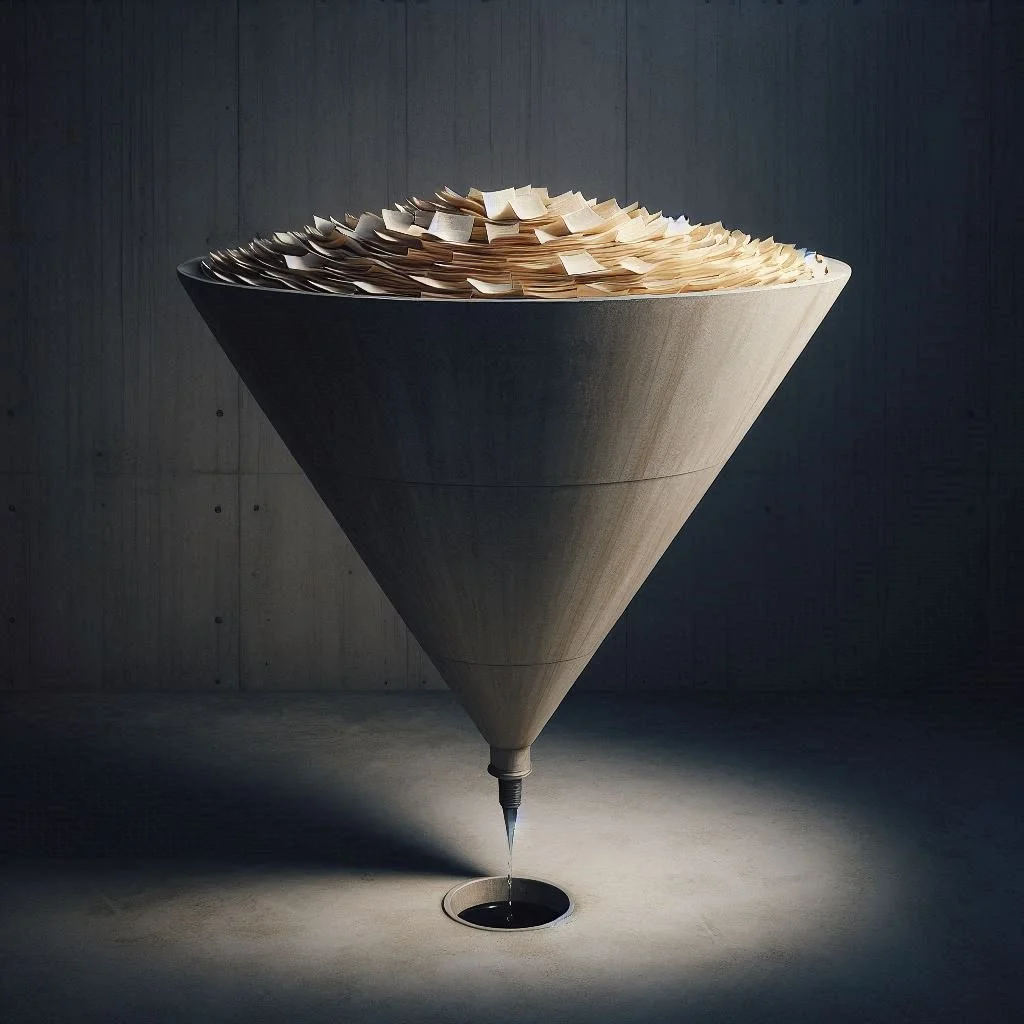
Above: Paperslip.org’s AI depiction of NCRC’s massive backlog of requests by Korean Adoptees worldwide.
On July 19th, 2025, ALL former Korean Adoption Agency files — including those of KSS (Korea Social Service) — were transferred to the Korean Public Institution NCRC (National Center for the Rights of the Child).
Specifically the files were transferred to NCRC’s Temporary Storage Facility in Goyang, Gyeonggi-do — not to NCRC’s Main Office in Seoul.
This massive file transfer to NCRC profoundly changed the landscape of birth family search for ALL Korean Adoptees. Here we focus on how the transfer affected KSS Adoptees specifically.
We knew that the bottleneck at NCRC was coming.
Prior to the July 19th, 2025 transfer of all KSS files to NCRC, we dedicated over 15 months — from March 11th, 2024 - June 15th, 2025 — to trying to spread the word to KSS Adoptees to request both a birth family search and their formerly secret “Korean Adoptive Child Study Summary” from KSS.
While this KSS document as well as many others can now be obtained from NCRC, please read below to understand how the NCRC Petition for Adoption Information Disclosure process is fraught with difficulties.
+
What KSS Adoptees lost due to the July 19th, 2025 transfer of all KSS files to NCRC.
Part 1:
What KSS Adoptees lost in terms of the birth family search process.
While some may view the transfer of all former Korean Adoption Agency files to the Korean public institution NCRC (National Center for the Rights of the Child) as a victory for Adoptees, those of us who have spent the past decade navigating the search process through both KSS and NCRC know the reality is far more complex. For KSS Adoptees, the July 19th, 2025 transfer of all former Korean Adoption Agency files to NCRC — including those of KSS — resulted in the loss of many important documents and elements that had previously been present at KSS.
We want to begin by acknowledging that the KSS birth family search process prior to the July 19th, 2025 transfer of KSS files to NCRC was far from perfect — it was riddled with maddening inconsistency, lack of transparency, and practices that many Adoptees experienced as cruelly deceptive, deeply humiliating, and enormously frustrating. For many (though not all) KSS Adoptees, the search process was often marked by confusing, unpredictable shifts in what information could be accessed and what outcomes were possible, creating a journey filled with uncertainty, contradictions, and severe emotional hardship. We certainly do NOT want to paint a nice picture of what the KSS birth family search process was like before for most KSS Adoptees — it was never a nice process for most KSS Adoptees.
We have often darkly joked that whether or not a KSS Adoptee was able to obtain information from KSS just depended on whether or not a KSS social worker had eaten good kimchi that day.
That being said, KSS Adoptees had a few benefits when their files were at KSS, prior to the transfer to NCRC.
KSS Benefit 1:
First, KSS had three dedicated social workers.
By this, we do not mean “dedicated” in the sense of devoted to their craft, but in the sense that these three KSS social workers had nothing else to do but respond to KSS Adoptees’ requests, since that was their one job. KSS stopped processing adoptions in 2012, and from 2016-2025, around three KSS social workers operated out of KSS’ one remaining building after KSS tore down its main campus in 2016 — a single story white structure known as the Post Adoption Services building. We refer to this colloquially as the Post Adoption Services Shed, since it basically appeared to be a converted garden shed. Improbably, ALL of KSS’ files were stored in this building, presumably starting in 2016 after KSS tore the majority of its old campus down, and ending on July 19th, 2025, when all KSS files began to be moved to NCRC’s Temporary Storage Facility in Goyang, Gyeonggi-do, where (at least for now) they still reside. (The files could move again in the future, so stay tuned).
KSS Benefit 2:
KSS had somewhat “timely” response times — whereas NCRC’s reponse times are abysmal:
Since KSS was the smallest of the four major historical Korean Adoption Agencies, and sent around 20,000 children for adoption to the West between 1964-2012, this meant that KSS Adoptees could at least expect an initial email response from KSS within a somewhat reasonable time frame. Depending on the request, the email response time from KSS could range from days to a few months.
KSS Benefit 3:
KSS had institutional knowledge.
KSS employed a long-serving female social worker who began working at the agency in 1976 and remained there until her retirement around 2023 or 2024. By sometime in the 2000s, she had become the Director of KSS. While this individual could be frustrating in the extreme for some to deal with, she at least had very long term institutional knowledge of KSS’ practices and procedures.
By contrast, NCRC only has a rotating cast of around 5 civil servants (not social workers) to handle the birth family search requests of ALL Korean Adoptees around the world. It’s estimated there are about 250,000 of us, though estimates widely vary. NCRC is a Korean public institution, meaning that its workers are government civil servants with little or no social work training, who by law rotate jobs every 3 years or so. This means that there is very little institutional memory or knowledge amongst NCRC’s constantly changing cast of overworked civil servants.
Due to the intense bottlenecking of requests at NCRC — by its own admission, NCRC currently has a backlog of about 2,000 requests dating back to Fall 2025 — KSS and ALL Korean Adoptees can expect MONTHS long wait times for fulfillment of their Petition for Adoption Information Disclosure requests.
KSS Benefit 4:
KSS possessed over a decade of emails, and potentially decades of email and letter correspondence between KSS and Korean birth parents of KSS Adoptees.
This is actually a very mixed bag in terms of this being a “benefit” of such correspondence having been kept by KSS, since it is known that KSS often refused to share birth parent letters with Adoptees, unless the Adoptee happened to visit KSS in Seoul in person, and a KSS social worker happened to feel like sharing this information with the Adoptee. In some cases which we know of, Adoptees arrived years after a birth parent who had written a letter had passed away — tragically and egregiously, KSS had never alerted the Adoptee of their birth parents’ attempt at contact. We can only guess at the enormous amount of ambiguous loss this has caused some KSS Adoptees.
While KSS printed and preserved in KSS Adoptees’ files the email correpondence KSS itself had with Adoptees, who knows what has become of KSS’ private correspondence with KSS Adoptees’ birth parents — who were often refused contact with their children who had become KSS Adoptees.
It will depend on each KSS Adoptee’s case as to how much of this birth parent correspondence was preserved by KSS in their former KSS files at NCRC — and if this correspondence will be accessible and remain unredacted by NCRC.
In March 2026, NCRC told us that they had NOT preserved any digital files of KSS. This means that any email correspondence between KSS and Korean birth parents over the past decades (since the dawn of email around 1998) were NOT preserved by NCRC — unless such correspondence was printed and included in a KSS Adoptee’s file, which was then transferred from KSS to NCRC.
KSS Benefit 5:
KSS would perform a birth family search once per year upon an Adoptee’s official request — assuming that there was any birth parent information to go on.
KSS was NEVER perfect, but Adoptees (who knew about their rights — noting that KSS rarely informed Adoptees of them) could at least reasonably expect that KSS would perform a birth family search once per year — as is their right — upon a KSS Adoptee’s specific request through KSS’ former simple two form birth family search request process (which is now OUTDATED). (Of course, the major issue with KSS was that KSS NEVER regularly informed KSS Adoptees that they could request their formerly secret “Korean Adoptive Child Study Summary” through the KSS process — this is something we at Paperslip had to figure out for ourselves in 2021). And of course, due to massive and routine Orphanization of KSS Adoptees, many KSS Adoptees have no real information on which to base a birth family search — leaving DNA testing as one of their only hopes for finding any blood relatives.
ALL Adoptees — including KSS Adoptees — are permitted to submit a birth family search to NCRC once per year (assuming there is any birth parent information in an Adoptee’s file to go on) — however, NCRC’s response times are so long that this renders the “once per year” policy nearly impossible to fulfill in practical terms.
Given the enormous backlog due to the perpetual short staffing of NCRC (which NCRC will forever blame on the lack of funding from the Ministry of Health and Welfare / MOHW — ultimately, the Korean Government is to blame) — the fact that ALL Korean Adoptees are supposed to be able to submit a birth family search request to NCRC once per year loses almost all meaning in practical terms. If it takes NCRC nearly a year to fulfill each Adoptee’s birth family search request, we really don’t know how it will work in reality for NCRC to perform a birth family search for each Adoptee who requests one, once per year.
KSS Benefit 6:
Because of the collective benefits mentioned above, KSS was facilitating at least one reunion per month for KSS Adoptees with their birth families — at least according to our knowledge, based on the KSS Adoptees with whom we were in touch between 2021-2025. Bear in mind that we were only in touch with a limited number of KSS Adoptees during this time period — KSS would have been in touch with far more — but according to KSS itself, they were facilitating about one reunion per month on behalf of those KSS Adoptees whose birth parents could be found and contacted, and who consented to a reunion.
Paperslip’s intensive efforts between 2020-2025 to push KSS Adoptees to request both their information and a birth family search from KSS likely increased the number of KSS Adoptee reunions which happened during this time period.
Because KSS had 3 long-term social workers assigned solely to serving the comparatively smaller population of KSS Adoptees, while NCRC currently has only about 5 rotating civil servants responsible for the needs of ALL Korean Adoptees worldwide; because KSS social workers accumulated substantial institutional knowledge over many years, whereas NCRC staff generally do not possess the same depth of historical familiarity; and because KSS had direct access for decades to Adoptees’ and birth parents’ emails and Adoptees’ paper files and digital microfiche records, *resources that NCRC does not currently possess, KSS was able to facilitate more reunions for KSS Adoptees than NCRC is likely to achieve under the current structure and circumstances.
*Please note that KSS did PRINT out its email correspondence with Adoptees, and preserved this printed email correspondence in KSS Adoptees’ files which were transferred to NCRC. However, separate KSS email communication with birth parents may either not have been preserved or prints may be redacted within a KSS Adoptee’s file at NCRC.
In other words, KSS Adoptees may ultimately experience fewer reunions through NCRC than they did through KSS. While this cannot be stated with statistical certainty, it appears probable given the current circumstances. NCRC's resources are consistently stretched impossibly thin across the needs of ALL Korean Adoptees worldwide, rather than being dedicated exclusively to KSS Adoptees, as was previously the case at KSS prior to the file transfer from KSS to NCRC.
Because of this, if a KSS Adoptee already has in their possession critical information needed for birth family search — such as birth parent name/s and birthdate/s (BOTH are required for a search, assuming there is no other relevant information) — then KSS Adoptees should strongly consider NOT ONLY submitting a Petition for Adoption Information Disclosure request through NCRC, BUT ALSO searching independently of NCRC through other means, such as through the NGO in Korea called GOAL; through private investigators (if possible); or with the help of hired translators.
And, of course, any Korean Adoptee with an interest in birth family search should take ALL POSSIBLE DNA TESTS.
Due to the never-resolved issues of NCRC and it’s likely perpetual backlog of Korean Adoptees’ requests, DNA testing is now more important than ever.
Please see:
DNA Testing
Part 2:
What KSS Adoptees lost — but did not even know about — due to the July 19th, 2025 transfer of all KSS files to NCRC.
Please see related:
Will NCRC Preserve KSS’ Death Books, Digital Microfiche Files, and Computers?

Above: Paperslip.org’s AI depiction of KSS’ death books, as seen by this author at KSS in 2019. In March 2026, NCRC said that they “didn’t know” if these KSS death books had been transferred from KSS to NCRC.
Please note that this image does not look exactly like what we saw in 2019, and unfortunately we do not have a photo of the actual KSS death book. The notebook we saw was not a binder but just a standard writing notebook with maybe a black paper cover — like something you would buy from a drugstore for homework. The photos of children were in a column to the right and their death dates were to the left. We are not sure of the exact positioning of the death dates, but the fact that these were death books has been confirmed twice by a translator who was present at the time when we were shown a death book by the senior KSS social worker.

Above: An AI generated image of a KSS digital microfiche file on its computers. Please note that this image does not look exactly like what we saw in 2019 and 2021 at KSS’ former Post Adoption Services building, and unfortunately we do not have a photo of the actual KSS digital microfiche files we saw. However, this gives a good general idea of what we saw at KSS’ former Post Adoption Services building, in the office where the social workers worked.
In March 2026, we asked NCRC if they had preserved KSS’ death books — which we had seen at KSS in 2019. NCRC said that it “did not know”, since NCRC had not finished cataloging everything which had been transferred from KSS to NCRC starting July 19th, 2025.
However, NCRC admitted that they did NOT transfer any digital files — including KSS’ computers or digital microfiche files.
This is a HUGE loss for the KSS Adoptee community — which most KSS Adoptees do not even know about. KSS largely did not publicize the fact that it had digital microfiche files on its computers in its office at its former Post Adoption Services building in Seoul. These digital microfiche files were more limited versions of what was contained in a KSS Adoptee’s physical file at KSS.
Our egregious exclusion from TRC 2 by the supposed “Korean Rights” group representing Korean Adoptees in the TRC 2 investigation into Overseas Adoption (2022 - 2025) meant that we were unable to inform the TRC 2 investigators about KSS’ death books and digital microfiche files. This counts as an enormous and unfathomable loss for the global KSS Adoptee community.
+
What KSS Adoptees can GAIN due to the July 19th, 2025 transfer of all KSS files to NCRC.
The main benefit of the transfer of all former KSS files to NCRC is that NCRC — by and large — is providing far more documents all at once to KSS Adoptees than most were previously able to obtain piecemeal (one at a time) from KSS over months or years of time. Prior to the file transfer to NCRC, KSS Adoptees often had to beg or fight KSS for documents, and / or make repeated expensive trips to KSS in Seoul to attempt to get little pieces of their file over years — or decades — of time.
However, this NCRC benefit presumes that an Adoptee can survive the gauntlet of the NCRC Petition for Adoption Information Disclosure request process via the notoriously poorly functioning KAS website.
KSS Adoptees previously had to request documents ONE BY ONE through email from KSS, and they were expected to be psychic and to the know the exact names of KSS documents to request — the existence of which KSS Adoptees had never been made aware by KSS. KSS Adoptees who visited KSS in person were never guaranteed to view or get a copy of their file.
That being said, the wait time for NCRC’s fulfillment of a KSS (or any Korean Adoptee’s) Petition for Adoption Information Disclosure is MONTHS long. The wait time can be excruciating — but with patience, those in the months long line for NCRC have been getting their files — eventually.
The process is expedited only for those Adoptees who can afford to go to Korea in person — and this presumes that the Adoptee can survive the gauntlet of the NCRC process of both submitting a Petition for Adoption Information Disclosure request through the long outdated KAS website, and successfully booking two separate appointments at NCRC’s Temporary Storage Facility in Goyang, Gyeonggi-do (to VIEW their KSS file) and THEN at NCRC’s Main Office in Seoul (to get a COPY of their KSS file).
You will REALLY need to read our START HERE! FAQ + SITE NAVIGATION to survive the NCRC process!
This being said, KSS Adoptees can now obtain a plethora of documents from NCRC which they rarely could from KSS.
Amongst these formerly secret KSS documents, which we at Paperslip first documented, are:
The formerly secret KSS “Korean Adoptive Child Study Summary”.
The formerly secret KSS “국내소속서류작성의뢰서” (Request Form for Preparation of Domestic Affiliation Documents).
Additionally, please see:
Illustrated Catalog of Known KSS Documents.
*Please note that these documents are specifically related to KSS ONLY and DO NOT apply to Korean Adoptees from other Korean Adoption Agencies.