
The Origins Of The FRONTLINE / Associated Press (AP) documentary "South Korea's Adoption Reckoning".
Before a FRONTLINE documentary became a possibility, I had reached out to AP reporter Tong-hyung Kim in January 2021 to write a story about my investigation into Systemic Switching.
He agreed, and an independent filmmaker friend of mine filmed our subsequent meetings in Seoul in June 2021. In order to accomplish this visit, I first had to spend two weeks in a government quarantine hotel upon my arrival in Seoul. Covid was still going on, and when I arrived to Incheon Airport, it was almost completely empty.
I invited Tong-hyung to my meeting at KSS in June 2021, which was also filmed by my friend. According to Tong-hyung Kim’s own words in the write up about the award he received for the eventual article about my case, this meeting at KSS became ground zero for his subsequent reporting on S. Korean Adoption.
However, I never anticipated that, after four years of providing this journalist with information and contacts, that I would ultimately be shut out of the documentary entirely, while he became its central figure — and that my contributions would remain completely unacknowledged in the documentary’s credits.

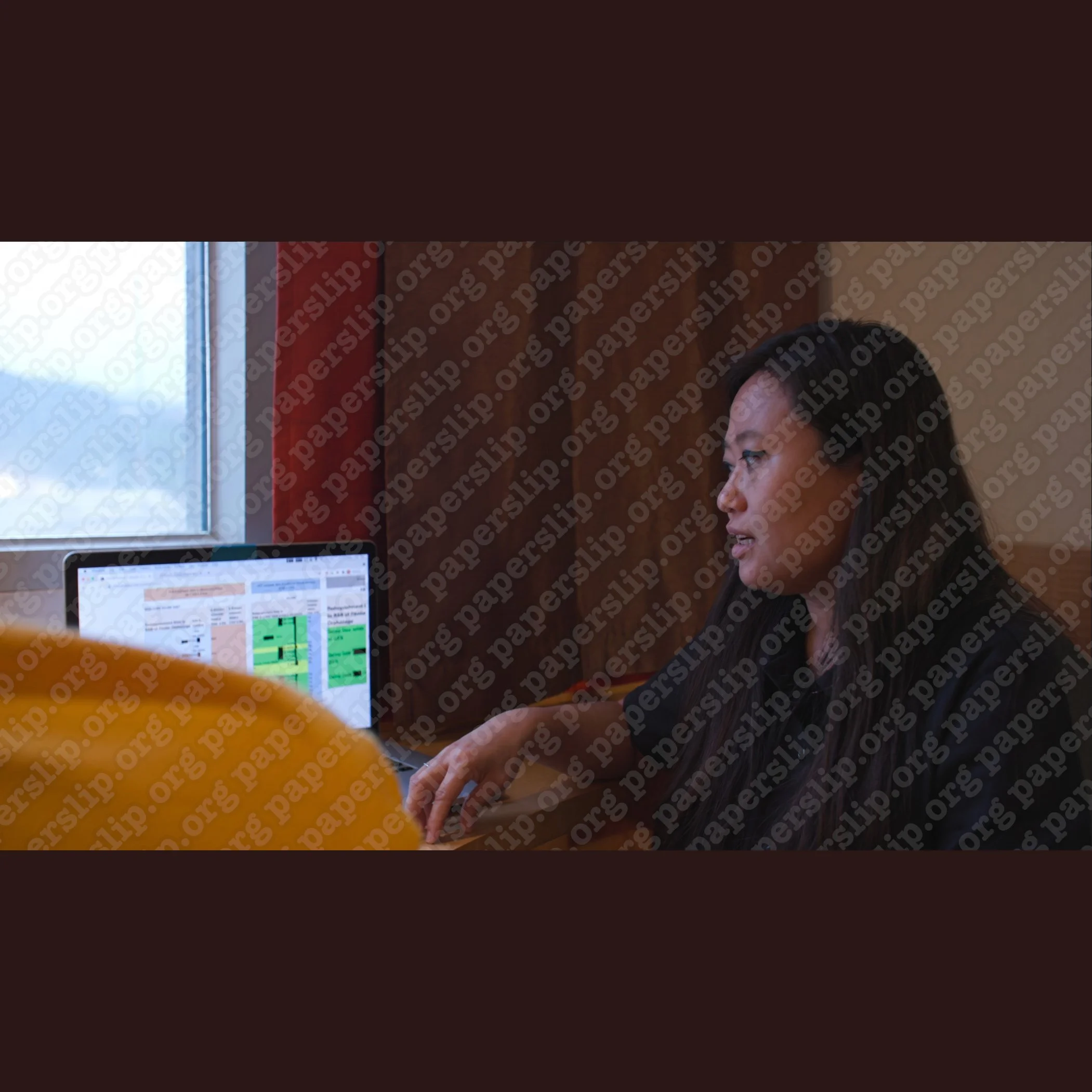
Above: Stills from a filmed meeting on June 16th, 2021 of Paperslip Co-Founder Rebecca Kimmel (me, right) and Associated Press (AP) reporter Tong-hyung Kim (left). This meeting took place at a hotel in Seoul and shortly preceded my later 2021 meeting at my Korean Adoption Agency KSS (Korea Social Service), which Tong-hyung Kim and others attended at my invitation. This footage was filmed by an independent filmmaker —not by any journalist.
In these previously unseen film stills, I discuss my years long research into KSS K-Numbers with AP’s Tong-hyung Kim.
I had reached out to him in January 2021 to request that he write a story about Systemic Switching. Between 2021-2024, I would come to meet with AP’s Tong-hyung Kim twice in Korea (on multiple occasions in both 2021 and 2023) and have two extensive Zoom calls, one of which is recorded. Our meetings in 2021 were filmed. My meeting at KSS, which Tong-hyung Kim attended, was also filmed by an independent filmmaker. It is thus a matter of indisputable record that I discussed my KSS K-Number research with AP and KSS’ Director even before the formation of a certain “Korean Rights Group” which would later attempt to take false credit for my work, on January 1st, 2023. The group which attempted to plagiarize my work was not even formed until May 2022.
According to Tong-hyung Kim’s own words:
“They met in person months later and Kim accompanied Kimmel on a visit to her adoption agency in Seoul (my note: in June 2021) . There, after spending hours but failing to find Kimmel’s real file, an adoption worker made a startling admission that child switching had been a common practice at adoption agencies during the adoption rush of the 1970s and `80s, and that birthed Kim’s years-long obsession with reporting on adoption fraud out of Korea.”
Source:
Best of the AP — First Winner: A South Korean adoptee needed answers about the past. She got them — just not the ones she wanted
Despite Tong-hyung Kim’s admission in print that my meeting at KSS in 2021 was the genesis of his later years-long reporting on Korean Adoption — which culminated in the 2024 FRONTLINE / AP documentary, “South Korea’s Adoption Reckoning” — I was given ZERO credit in the documentary.
I had talked to Tong-hyung Kim since January 2021 about Systemic Switching, and referred countless Adoptees his way between 2021-2024. FRONTLINE would not enter the picture until late June 2023. I would introduce MANY of the main interview subjects of the documentary directly to FRONTLINE / AP at IKAA in July 2023. It had been my suggestion to film at IKAA, and I directly introduced the journalists to this Adoptee conference’s organizers in order to coordinate filming. If you subtract my contributions from not only the documentary, but also the associated articles and interactive, there is not much left.
For reasons I still don’t understand, FRONTLINE / AP would later FAIL to give me any credit for my work in the 2024 documentary, “South Korea’s Adoption Reckoning”.
+
The Origins Of The FRONTLINE / Associated Press (AP) documentary "South Korea's Adoption Reckoning".
How I was ironically ERASED from a documentary which was largely based on my years long investigation into Systemic Switching — which is inherently a process of IDENTITY ERASURE.
Setting the record straight after I received ZERO credit in the documentary.
By Paperslip Co-Founder Rebecca Kimmel
Originally Posted on October 16th, 2024
Revised and re-posted on October 4th, 2026
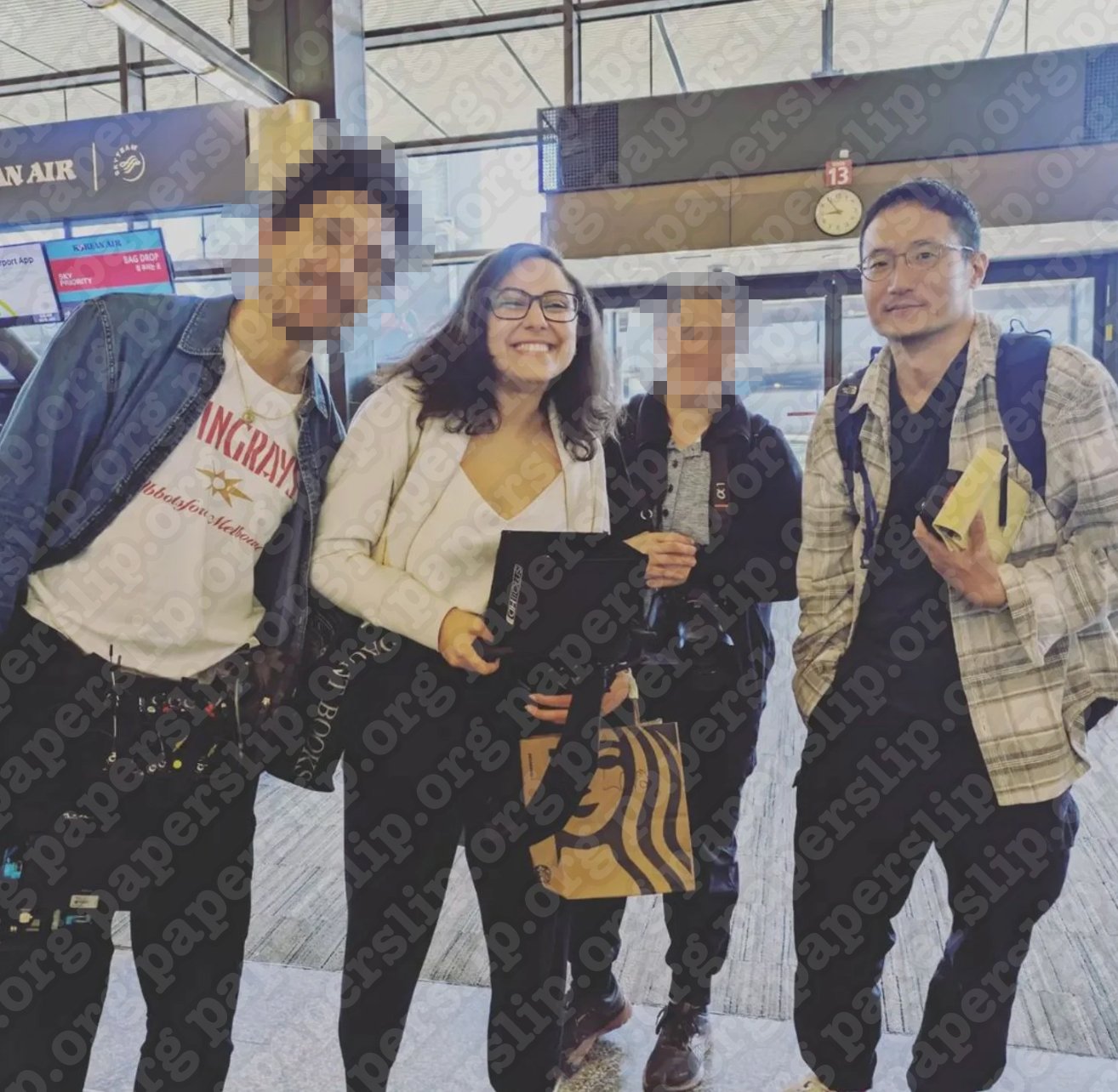
Above - Photo of the FRONTLINE / AP reporting team, taken by Rebecca Kimmel (me) on July 2nd, 2023 at SeaTac Airport in Seattle, prior to our departure on separate flights for Korea.
Left to Right: Víctor Tadashi Suárez (Videographer for South Korea’s Adoption Reckoning), Lora Moftah (Director), AP Photographer Lindsay Wasson, AP reporter Tong-hyung Kim.
Tong-hyung Kim first approached me about being filmed for the FRONTLINE / AP documentary in June 2023. I had first reached out to him in January 2021 to ask him to write a story about Systemic Switching, which he agreed to do. After years of informing him about my investigation, he told me that when there was an important story, FRONTLINE / AP often partnered, and when they did, they often won major awards. I readily agreed to be filmed, and the Videographer flew to Seattle from Los Angeles, the Director flew to Seattle from New York, and Tong-hyung Kim, the AP reporter, flew to Seattle from Seoul. The AP photographer was based in Seattle. After filming interviews with me for two days at my art studio and apartment in late June / early July 2023, we all (except the photographer) flew separately to Korea for further filming.
Once in Korea, FRONTLINE / AP would film at IKAA in July 2023 — which I had suggested to the journalists that they do, which is WHY the FRONTLINE team went to Korea at this specific time — and would also film and interview me outside of my Korean Adoption Agency, Korea Social Service (KSS). However, these scenes were ultimately cut from the documentary, due to my story being too long (according to the Director).
Interview footage filmed of me at my studio and apartment was not included in the documentary (except for literally one second), but the interviews conducted with me were included in the FRONTLINE / AP article about my case and in the interactive which features my and other Adoptee’s cases.
Despite informing Tong-hyung Kim about Systemic Switching for years (2021-2024) and despite my having referred the majority of the interview subjects to FRONTLINE / AP, I received ZERO credit in the resulting 2024 documentary “South Korea’s Adoption Reckoning”. AP did however publish an article about my case and FRONTLINE / AP featured my story in an online interactive.
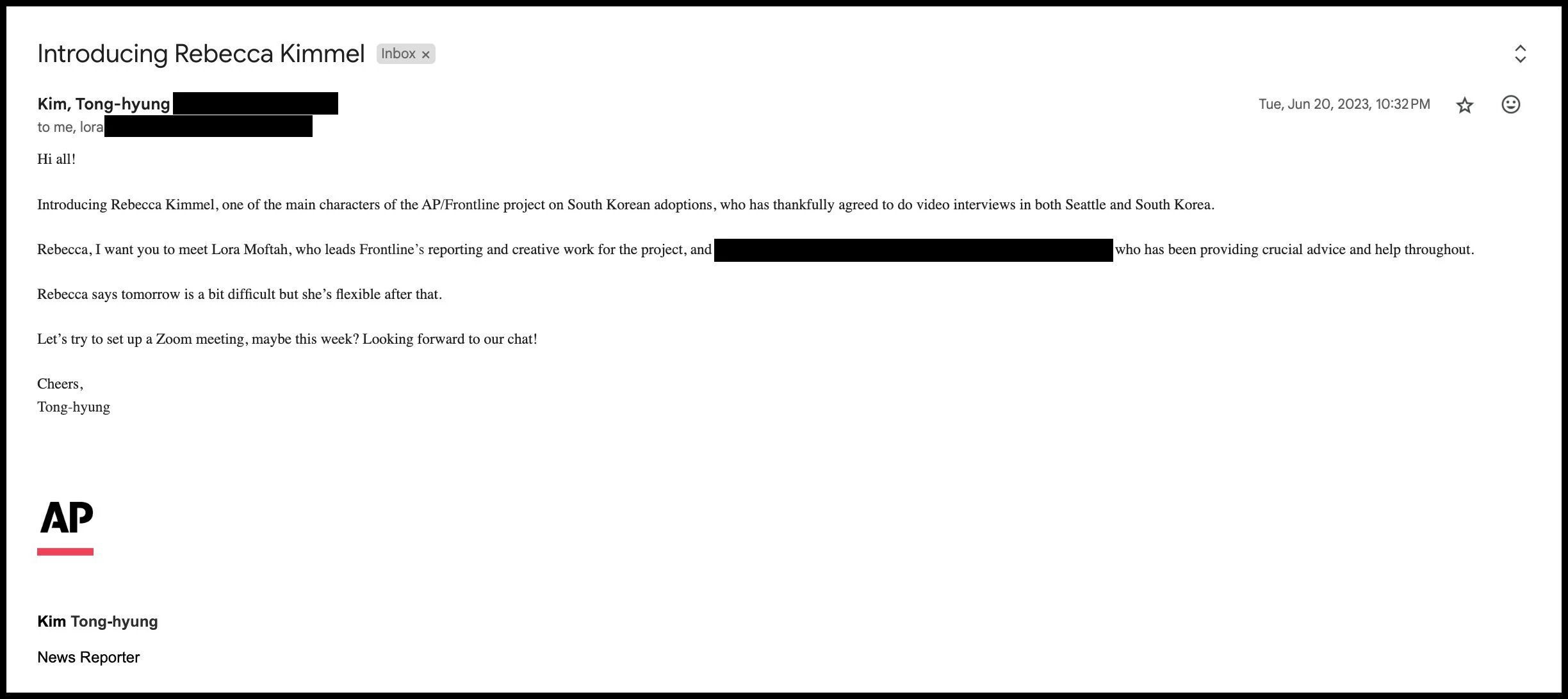
Above - My involvement in the FRONTLINE / AP documentary “South Korea’s Adoption Reckoning” began with an email I received on June 20, 2023 from Associated Press / AP reporter Tong-hyung Kim, whom I had first contacted in January 2021 about doing a possible story about my and my likely twin sister’s switch cases, which he had agreed to do. I scrambled to get the space I had just leased for my Seattle based business “Korpus Studio of Art” in shape in time for FRONTLINE / AP to interview me there - which occurred over two days, June 30th - July 1st, 2023. Following that we all flew to Korea to film in Korea as well. In the email above, Tong-hyung introduces me to FRONTLINE Director / Producer Lora Moftah, pictured second from left in the photo at top.
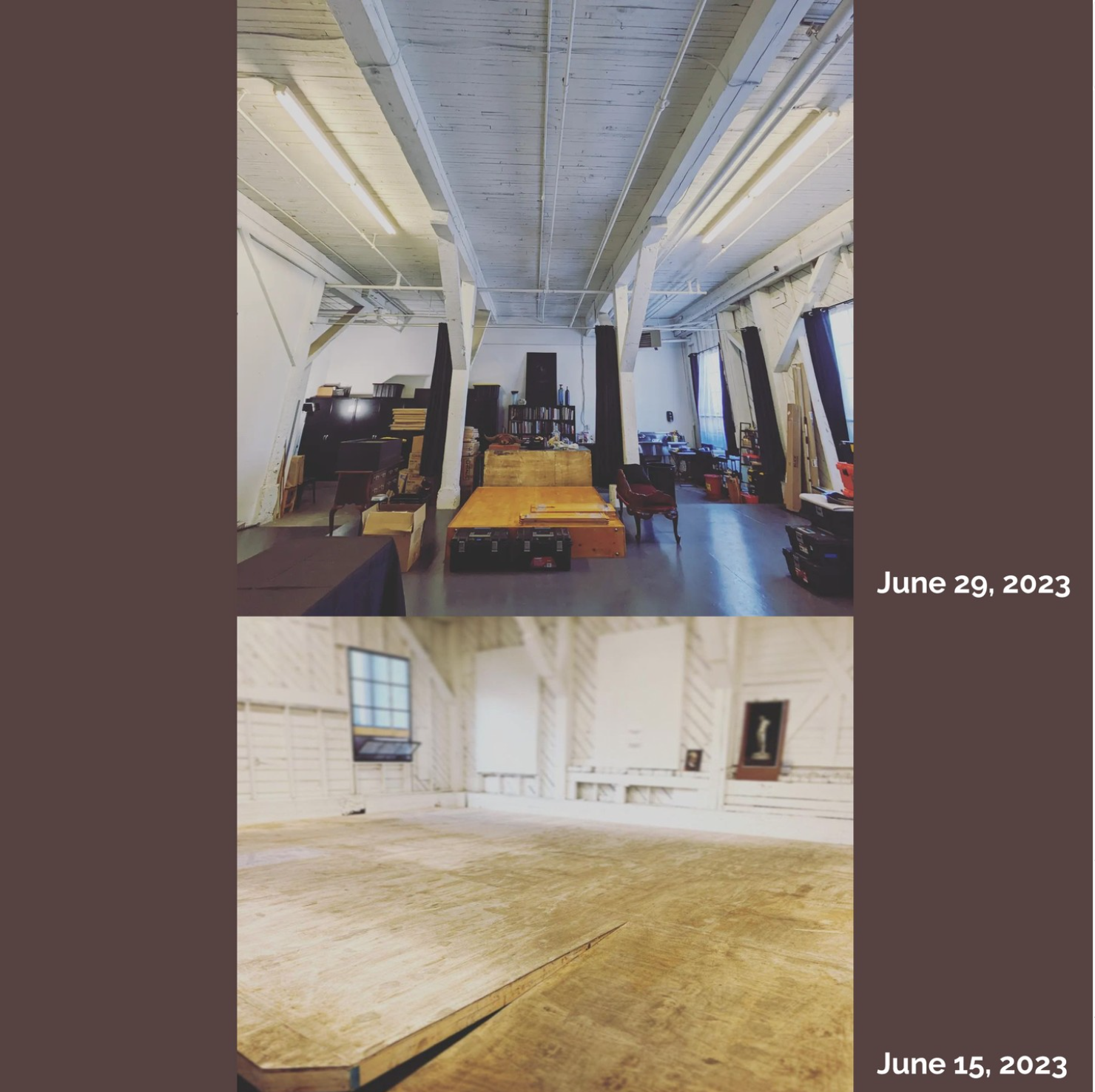
Above - I had to scramble to get my recently leased space for the Seattle incarnation of Korpus Studio of Art ready for the FRONTLINE / AP filming, which occurred over June 30th - July 1st, 2023. I had only moved into the space on June 1st, 2023, which is why my apartment is full of boxes in the Associated Press article about my case. I had to bust my a$$ to paint the studio’s raw floor with 4 coats of paint — and wait for it to dry before moving everything in from a shipment from California, whose arrival I had to time precisely. I have never done so many moves in so short a space of time — the move into my studio from California, and the move of several of those boxes to my apartment in Seattle. I wanted to move everything extraneous out of the studio space for filming, which is how all those boxes you see in the article about my case ended up in my apartment — unfortunately just in time for it to be filmed and photographed by international press. I originally told the reporters I did not want to be filmed at my apartment, but they insisted, so my box filled apartment is now memorialized in the media about my case. Yay.
+
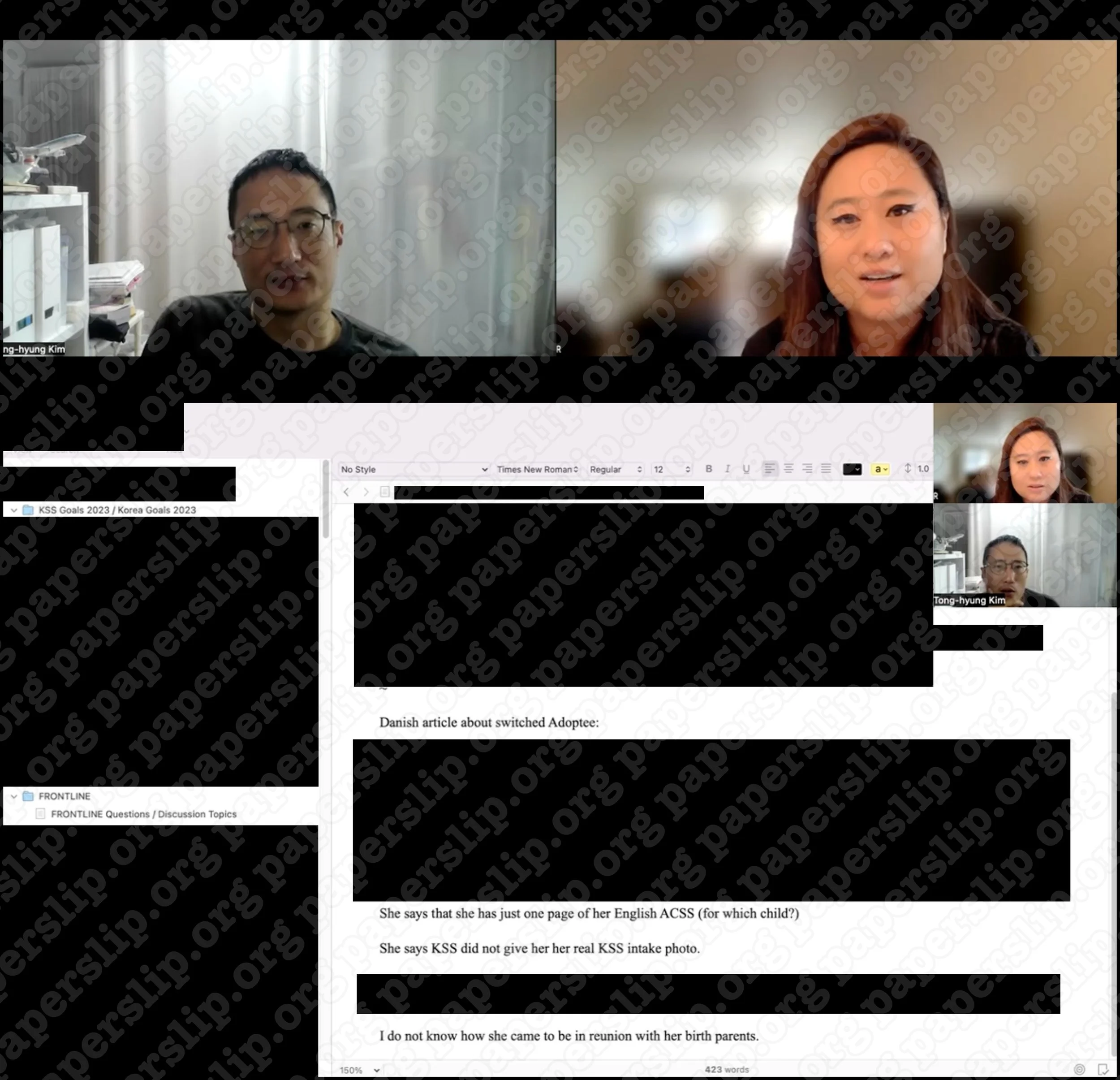
Above: Screenshot from a recorded Zoom between myself and AP reporter Tong-hyung Kim on August 6th, 2023. This meeting took place after I had returned to Seattle after filming with FRONTLINE / AP in Seoul. None of the footage filmed by FRONTLINE / AP would be used in the final documentary, though some of it was used in the article about my case, and the interactive which featured my case.
In this screenshot you can see that I am sharing information about a Danish switched Adoptee who has been public about her story. She was just one of over one dozen switched Adoptees to whom I connected this journalist between 2021-2024.
+
My significant contributions to AP’s reporting on S. Korean Adoption issues were acknowledged in the AP article below, in which the story about my case receives an award. However, the FRONTLINE / AP documentary “South Korea’s Adoption Reckoning” — which was largely built on my years of investigation into Systemic Switching — never acknowledges my contributions at ALL.
Despite this, FRONTLINE Director Lora Moftah privately acknowledged to me in 2024 after the release of the documentary that “the entire FRONTLINE team was amazed by my investigation,” that my “handprints were all over the documentary” and that I was “the driver” of its narrative.
It should therefore not have been difficult to add at least a note of “Special Thanks” in the documentary’s credits. But FRONTLINE / AP failed to do so. They also failed to correct this, and they have failed to apologize.
I should note I had no interest in the Korean Adoption Agency Holt — my main interest has always been in Systemic Switching and in Korea Social Service / KSS — my Korean Adoption Agency. Choosing to pursue Holt was purely the decision of FRONTLINE / AP.
+
My significant contributions to the reporting were at least acknowledged in print by AP, in the article below which confers an “AP First” award upon the article about my case:
Best of the AP — First Winner:
A South Korean adoptee needed answers about the past. She got them — just not the ones she wanted
“Thousands of South Korean adoptees are looking to satisfy a raw, compelling urge that much of the world takes for granted: the search for identity. Like many of them, Rebecca Kimmel stumbled into a web of switched photos, made-up stories and false documents — all designed to erase the identity she desperately wants to find.
The story was made possible by South Korean-based reporter Kim Tong-hyung’s exceptional source development and relentless, decade-long pursuit of the truth. Kimmel got in touch with him years ago, after she read his stories about suspected fraud in South Korea’s adoption system. (My note: I had gotten in touch with Tong-hyung Kim in January 2021 after reading his stories about Brothers Home in Busan specifically. He had not yet written broadly about Korean Adoption).
Their first conversation over Zoom went on for several hours. Kimmel unpacked her lifelong doubts about the girl in her adoption file that didn’t look like her, how that drove an exhaustive search to find her true biological origins, her repeated false starts and the pain of being stymied at each step, and her growing sense of loss from living with an identity based on someone she wasn’t.
They met in person months later and Kim accompanied Kimmel on a visit to her adoption agency in Seoul. There, after spending hours but failing to find Kimmel’s real file, an adoption worker made a startling admission that child switching had been a common practice at adoption agencies during the adoption rush of the 1970s and `80s, and that birthed Kim’s years-long obsession with reporting on adoption fraud out of Korea.
He kept in touch with Kimmel for years and observed how her search efforts resulted in an unexpected reunion between people she’d never met — adoptee twin sisters Becca Webster and Dee Iraca in North Carolina and their aging Korean father. After discussing how to incorporate Kimmel’s unusual and complicated efforts to find her true biological origins, we concluded that a narrative-style story was the best way to handle it.
The judges were impressed by the narrative arc, economically and powerfully written, that conveyed Kimmel’s anger and frustration, and the poignant reunion of the twin sisters with their biological father.
The average read time for the story was 4 minutes and 40 seconds, an exceptional number for any AP content.
This was the third major story about the Korean adoption system. Since then, more than 70 adoptees have reached out to AP, asking for help or wanting to add their experiences to our reporting. We believe this project will, in the end, have an exceptional impact.
For a story that resonated deeply with adoptees who have been searching in vain for their birth families, Kim, Klug and Galofaro earn this week’s Best of the AP — First Winner.”
+
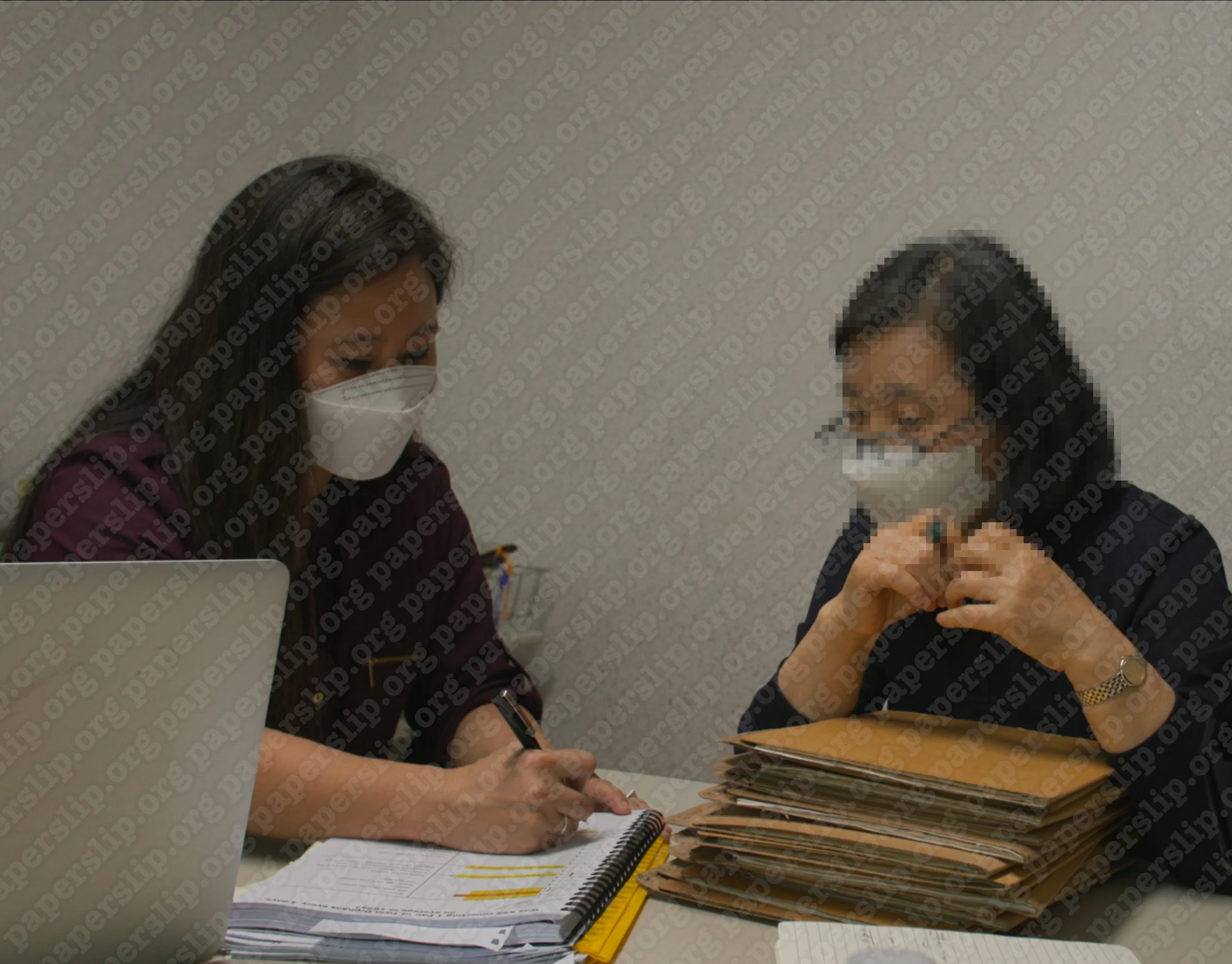
Film still from my 2021 meeting at KSS, to which I had invited AP reporter Tong-hyung Kim.
Left: Rebecca Kimmel (me), Right: KSS’ former Director, now retired. She had worked at KSS since 1976 — a year after I first arrived at KSS in 1975, and the year I departed KSS for the US. She had the most institutional knowledge of KSS of any KSS staff I met between 2018-2024.
This meeting was filmed by my independent filmmaker friend and not by any journalist.
Mrs. Kim confirmed the first digit KSS K-Number codes which I had solved between 2020-2021 to me on camera in this meeting. Here I am asking her if KSS K-Numbers in the 1970s repeated, which she confirmed on camera.
Don’t you think this film footage — which is likely the only footage of its kind in the world — might have been significant EVIDENCE for TRC 2, which was hyper-focused on EVIDENCE? Yet I was pushed out of the TRC 2 movement by supposed “Korean Rights Groups” who wanted false credit for my work. This seems to be a theme here, doesn’t it?
+
I had invited Tong-hyung Kim to accompany me to my Korean Adoption Agency KSS in 2021, and the fact that the admission by KSS’ then Director during my meeting that “switching happened all the time”…“birthed Kim’s years-long obsession with reporting on adoption fraud out of Korea,” is acknowledged in the AP article above.
Given the fact that my case was ground zero for Tong-hyung Kim’s subsequent reporting on adoption, don’t you think that I should have received SOME form of acknowledgement in the documentary, considering its primary focus was on Systemic Switching?
Yet I received ZERO credit in the documentary.
While I initially supported the documentary, it became clear to me after its release that no one had any idea that I had any connection to it.
While AP published a significant story about my case, and FRONTLINE / AP published an online interactive which featured my case, no one watching the documentary would ever have any clue that I was the significant driver behind it.
It is pretty ironic to be almost completely ERASED from a documentary which is largely based on your years long investigation of Systemic Switching — which is a systemic process of IDENTITY ERASURE!
+
At top is a throwback photo to July 2nd, 2023 with the FRONTLINE / AP (Associated Press) crew at SeaTac Airport in Seattle - most of us were about to leave for Korea to film at IKAA, after filming my interview at my Seattle teaching studio Korpus Studio of Art.
I had approached AP reporter Tong-hyung Kim in January 2021 to do a story about my and my likely twin's switch cases, and the systemic practice of switching in S. Korean Adoption. I knew of Tong-hyung’s previous articles about the Brothers Home Concentration Camp in Busan, and its connection to Korean Adoption. So I knew that he was already well aware of the dark side of Korean Adoption, and would take the topic seriously.
Tong-hyung agreed to do the article, and we were in frequent communication between January 2021 — 2025. Tong-hyung accompanied me to my Korean Adoption Agency KSS (Korea Social Service) in 2021 where KSS confirmed to me in person the first digit KSS K-Number codes I had figured out in 2020, having collected hundreds of KSS K-Numbers in a desperate search for answers in my likely twin's switch case. A summary of that original research is here:
KSS K-Numbers
The fact that my original KSS K-Number research is directly tied to my investigation into my and my likely twin’s switch cases is validated by the Associated Press / AP article about my story:
A South Korean adoptee needed answers about the past. She got them — just not the ones she wanted
AP reporter Tong-hyung Kim was present at KSS in Summer 2021 when KSS’ former Director (now retired) directly confirmed to me the first digit KSS K-Number codes that I had figured out in 2020. KSS’ former Director also confirmed that KSS K-Numbers repeated in the 1970s, and that some KSS Adoptees DO NOT have unique K-Numbers. I knew by January 2021 that KSS was assigning children with encoded K-Numbers in its system at the ORPHANAGE level for adoption - in other words, when a child FIRST entered KSS’ system, whether through a “feeder orphanage” or through KSS in Seoul directly.
On January 1, 2023, other supposed “Korean Adoptee Rights Activists” attempted to take credit for my work - and as part of this egregious attempt, blocked me out of the Second Truth and Reconciliation Commission (TRC 2) investigation into Overseas Adoption, thus preventing me from presenting my own extensive evidence to TRC 2 investigators — not only about KSS K-Numbers, but about much else related to KSS history and practice. Those involved in this blatant plagiarism attempt were well aware of my long term research into KSS. I was therefore unable to get justice for my or my twin's switch cases through TRC 2, despite my case having been one of the first 34 cases accepted for investigation back in December 2022. However, the KSS K-Number research - conducted with the participation of the global KSS Adoptee community - was always deeply tied to my search for my likely twin sister "Baby A" through KSS' K-Number system, and other numbering systems. I am glad that the AP article finally clarified once and for all the connection between my investigation into my and my likely twin’s switch cases, and the KSS K-Number (what the article calls “case number”) research:
“Kimmel threw herself into examining the complex numerical system KSS used to log adoption cases, based on hundreds of case numbers she collected from other KSS adoptees. In 2021, she revisited the agency with a long wish list of files.”
Three years after I had first approached Tong-hyung, in June 2023 Tong-hyung told me that only in rare cases where a story was considered important, that FRONTLINE and Associated Press (AP) would partner. They wanted to do a documentary about Korean Adoption, and would I agree to be filmed for the documentary in Seattle? Of course I said yes, and filming for what became the FRONTLINE / AP documentary "South Korea's Adoption Reckoning" began at my studio Korpus Studio of Art in Seattle on June 30th - July 1st, 2023. (I had started my lease on the space for the Seattle incarnation of Korpus Studio of Art only a month before filming began, which is why my Seattle apartment is so full of boxes in the AP article photos and video - I had recently moved items to Seattle that had been in storage in Los Angeles since I had first moved from L.A. to Italy in 2018, following the discovery of my being switched). We then all departed for Korea to film at IKAA. The opening shots of various Korean Adoptees saying, "I am adopted from..." in the first part of the documentary are all people I ushered over to be filmed by FRONTLINE / AP at IKAA during IKAA's "Newcomer's" event. I am also the person who directly connected FRONTLINE / AP to IKAA organizers for permission to film during the event.
While I did not have any editorial control over the documentary, nor did I know whom FRONTLINE / AP would interview in terms of Adoption Agency representatives or US government officials, I did refer to FRONTLINE / AP five main characters who appeared in the final documentary: Eleana J. Kim (non-Adoptee Korean author of “Adopted Territory”), and Korean Adoptees Alice Stephens, Robert Calabretta, and Robyn Joy Park, who referred her friend Michaela Dietz. Both Robyn and Michaela had been part of the forum of switched Adoptees I had started in 2018. My research into systemic switching and organizing of around one dozen switched Adoptees ultimately led me to share my story with Tong-hyung in 2021, and to refer around one dozen switched Adoptees to Tong-hyung starting in January 2021. Many of these switched and non-switched Adoptees appear throughout the FRONTLINE / AP articles, interactive, in addition to the documentary. If you subtract my referrals from the entire series, there is not much left.
While I was certainly disappointed to only appear for only one second in the final documentary - which gave me absolutely NO credit for my years of work and referrals — I was told that an AP article about my and my likely twin's switch cases was on the way (after 4 years of waiting). But you never know if something will actually happen until it does.
The AP article about my and my likely twin's switch cases was finally published on October 14th, 2024. I hope that it continues to shed light on a dark subject - switching - which I have been researching since 2018.
+
LINKS:
AP Article about the separate switch cases of Paperslip Contributor Rebecca Kimmel and her likely twin sister “Baby A”:
"Who Am I? A South Korean Adoptee Finds Answers About the Past — Just Not the Ones She Wants"
Best of the AP — First Winner:
A South Korean adoptee needed answers about the past. She got them — just not the ones she wanted
FRONTLINE / AP Documentary “South Korea’s Adoption Reckoning” + Related Articles
+
Related Information on Paperslip.org:
KSS K-Numbers