
Do you recognize this German Korean Holt Adoptee, Ms. Kim Mae-ja (김매자)? I have found another Holt Korean Adoptee with a K-Number one digit apart from hers. Please contact me for info.
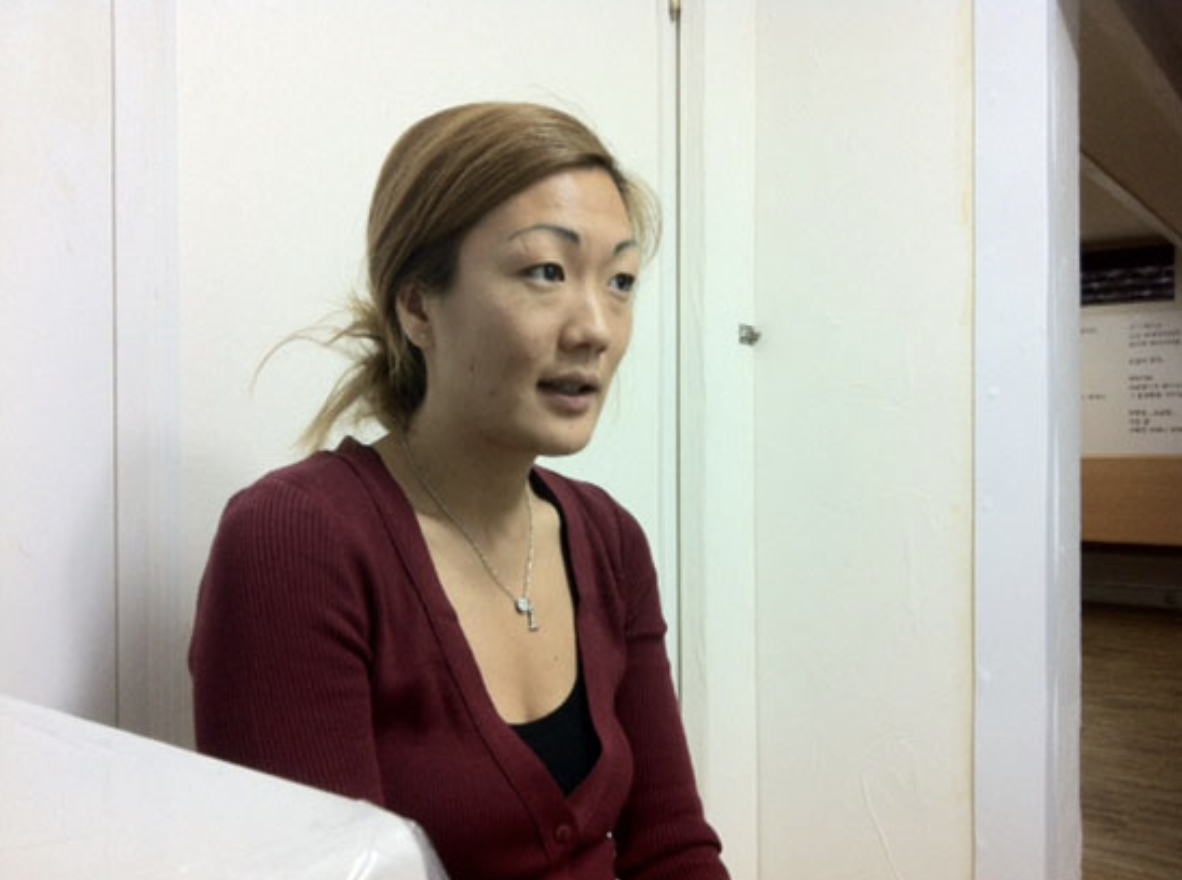
Do you recognize this German Korean Holt Adoptee, Ms. Kim Mae-ja (김매자)? I have found another Holt Korean Adoptee with a K-Number one digit apart from hers. This means that these Adoptees were at the same orphanage at the same time, which is often meaningful for Adoptees.
Please contact me for info if you are the German Korean Adoptee, or if you can put me in touch with her:
paperslipadoptee@gmail.com
Thank you!
+
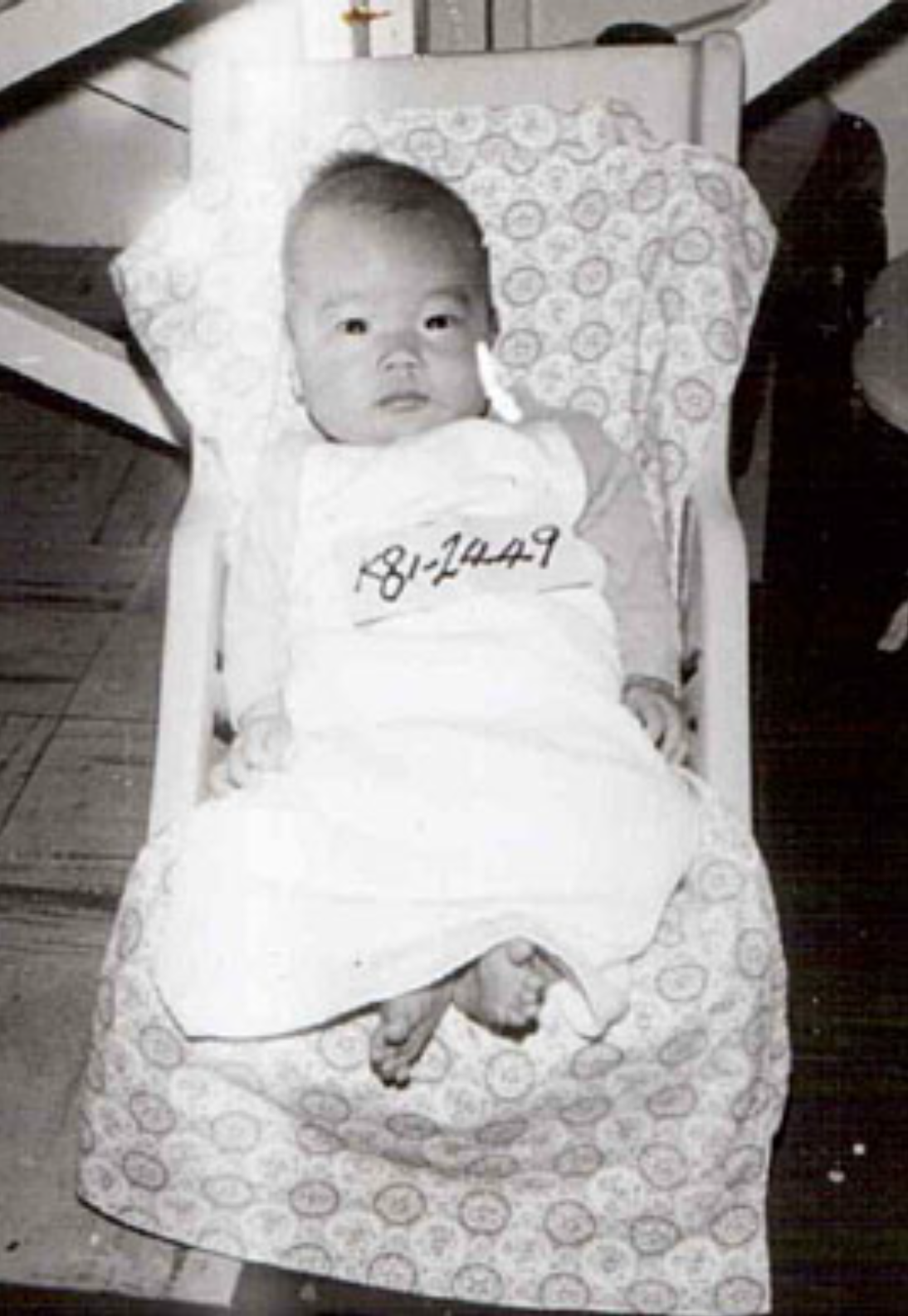
Photo source: OhMyNews — German Korean Holt Adoptee, Ms. Kim Mae-ja (김매자). Please contact us at paperslipadoptee@gmail.com if you are this Adoptee or if you know her.
Original article posted in Korean on August 30th, 2012.
ChatGPT English translation posted to Paperslip on October 9th, 2026.
BOLDS and blue highlighting ours.
‘“Dear Parents, It’s Mae-ja. Please Find the Courage to Contact Me.”
German adoptee Kim Mae-ja, born in 1981, searches for her biological parents in Korea
By Kim Seong-su (wadans)
August 30, 2012, 8:16 p.m. | Last updated August 30, 2012, 8:17 p.m.
This happened during the 1988 Seoul Olympics. Bryant Gumbel, a popular American CBS news anchor, asked a representative of an adoption agency during a morning news broadcast whether it was ethically problematic that South Korea, the host country of the Olympics, was the world’s leading country sending children abroad for adoption and earning money through the practice.
The question arose because South Korea had sent 6,463 children overseas for adoption in 1988 alone, receiving money in return.
When the American news anchor asked whether Koreans were making enormous profits through international adoption, a representative of an adoption agency responded unequivocally that “South Korea’s motivation for sending children abroad is not economic, but purely moral.” Of course, this representative’s answer was not true.
In 1988, adoption agencies received approximately US$5,000 in fees for each Korean child adopted overseas. Since 6,463 children were sent abroad that year, Korean adults had earned roughly US$32 million in foreign currency by selling children. At the time, this was a substantial sum from the perspective of the Chun Doo-hwan regime, which had carried out the Gwangju massacre.
According to the American publication Adoption Family in America, the average amount American adoptive parents paid to adopt one Korean child between 2009 and 2010 was US$37,586. Even today, Korean adults continue to earn foreign currency by selling Korean children for money.
Adopted to Germany at Six Months Old … Struggling with Depression and Anxiety
Kim Mae-ja during the interview
However, rather than criticizing Koreans for earning foreign currency by selling babies, German adoptee Kim Mae-ja criticizes wealthy Western countries that pay money to acquire babies under the banner of humanitarianism and charity, buying children as though they were shopping.
On the 30th, I met Mae-ja at Ppurui Jip (“House of Roots”) during her second visit to Korea to search for her biological parents.
Found in Korea and Sent to Germany
Kim Mae-ja was found by a police officer on patrol on July 27, 1981, in Cheonhyeon-myeon, Paju County, Gyeonggi Province. When she was discovered, she was suffering from severe neglect and starvation.
A police officer from the Cheonhyeon substation who found her telephoned Paju Bando Clinic (now Jungang Surgical Clinic, located at 835-1 Saimdang-ro, Paju) and asked the clinic to care for the starving infant. After two days in the hospital, Mae-ja was admitted to an orphanage called Gyeongsin Yangyeonhoe on July 29, 1981.
On October 13, 1981, Mae-ja was transferred from Gyeongsin Yangyeonhoe to Holt. Three months later, on January 25, 1982, she was sent to Germany for international adoption at just six months old.
Mae-ja’s adoptive father worked for a German pharmaceutical company, while her adoptive mother worked part-time at a hospital. Her adoptive parents were already raising two biological children: a daughter four years older than Mae-ja and a son two years older. They adopted Mae-ja because they wanted an Asian girl.
Perhaps because her adoptive parents belonged to Germany’s middle class, Mae-ja’s childhood was reasonably happy in material terms. The problems began sometime after she developed a sense of self-awareness.
From then on, her emotions became increasingly volatile. She was tormented by overwhelming loneliness that could strike at any time, depression, and intense anger rising from deep within her. As a result, she struggled with insomnia. Above all, she found the racism directed at her by German children during her childhood unbearable.
As Mae-ja grew into an adult woman, however, she experienced another form of discrimination. As a child, German children had mocked and discriminated against her for being Asian. Once she became an adult, German men began approaching her with excessive interest because they considered her appearance “exotic.” She found this equally distressing.
“I’m afraid of Europeans, especially Germans. It’s very difficult for me to trust people,” she said, her expression heavy with emotion.
Depression and Anxiety Worsened After the Birth of Her Daughter
In an attempt to overcome her depression, Mae-ja had a daughter in 2005 with her Italian-German partner. However, after giving birth, her depression and obsessive fears became much worse.
Mae-ja worked for Swiss International Air Lines, and her adoptive mother looked after her daughter while she was at work. Suddenly, Mae-ja was overwhelmed by an extreme fear that she might lose her child, accompanied by obsessive anxiety.
She could not bear to go more than a few minutes without calling her adoptive mother. While at work, she felt compelled to telephone her almost every ten minutes.
Eventually, her adoptive mother said to her, “My child, please calm down! How can you keep calling your mother every ten minutes? Please trust me and stop calling so often!”
Because of her persistent depression, anxiety, and obsessive fears, Mae-ja was admitted to a psychiatric hospital for four months the previous year.
Receiving massages and listening to pleasant music seemed to improve her condition while she was in the hospital. But after she was discharged, her depression returned to much the same state as before. Her psychiatrist suggested that her symptoms might stem from her longing for her biological parents.
“This Really Is My Homeland”: Tears at Incheon Airport
Kim Mae-ja before being sent overseas for adoption
Hoping to overcome her unexplained depression and find her biological parents, Mae-ja made her first-ever visit to Korea in June, 30 years after her adoption.
When she arrived at Incheon Airport, tears suddenly poured from her eyes.
She was bewildered, but despite the people around her, she could not stop the tears streaming down her face.
She had been away for 30 years and had never returned to Korea since her adoption. Yet, when she saw Korea’s blue sky and breathed its air at Incheon Airport, an inexplicable feeling welled up inside her.
“This really is my homeland!”
Afterward, she visited Holt and spent two frantic weeks trying to find her biological parents. But she could learn nothing about the parents she had dreamed of meeting for so long. Carrying her disappointment in her heart, she returned to Germany.
After returning to Germany, however, Mae-ja found that she could not concentrate on her work at all. So, on August 8, she returned to her homeland once again to search for her biological parents.
With special consideration from her supervisor, she was granted leave to visit Korea again. But she would have to return to Germany on September 11 for work.
“I really hope I can find my biological parents this time…” she said wistfully.
She looked deeply distressed and anxious, making it difficult not to feel for her.
“When I walk down the streets in Korea, I like that nobody stares at me. I love being able to simply be myself. In Germany, I have to use makeup to make my eyes look bigger and my skin look whiter. But in Korea, I can go out looking just as I am, and nobody thinks there is anything strange about me. That makes me feel so comfortable.”
As she spoke, Mae-ja looked genuinely at ease.
“How Can Anyone Justify Buying a Child as Though Shopping?”
“How can it possibly make sense to buy a child as though you were shopping? People pay money to choose a yellow child, a Black child, or a white child, just as they would choose pretty shoes, a wallet, or clothes.
“Rather than blaming the Korean government or Korean people, I criticize wealthy countries such as Germany and the United States that pay money to take babies overseas for adoption.
“Do you ask whether I am happy living as an international adoptee in wealthy Germany? Absolutely not. I am an unhappy person who has lost her trust in humanity.
“How can people buy babies—buy human beings—with money?
“International adoption is by no means a humanitarian act. If wealthy countries want to help poor countries, they should provide economic assistance directly rather than paying money to take their children away.
“Buying and selling children for money is neither charity nor humanitarianism. Under no circumstances can the current international adoption industry, in which babies are bought with money, be justified.
“International adoption is nothing more than a vast multinational business pursuing profit.
“I demand that wealthy countries such as Germany immediately stop this human trafficking in which they pay money to buy children.”
Mae-ja’s tearful plea struck the journalist deeply.
Looking directly into my eyes, she asked me a question:
“Who do you think is happier: someone who is materially wealthy but cannot live with their family, or someone who is materially poor but can live with their family?”
Her question compelled me to reflect more deeply on myself.
As I left the interview, a passage came to mind:
“Man shall not live by bread alone.”
The Following Is Kim Mae-ja’s Letter to Her Biological Parents in Korea
Dear Parents,
Hello.
I am your daughter, Kim Mae-ja.
Although I do not know your faces or your names, I have always longed for you. My love has always been directed toward you, and it has never changed.
Because I was forcibly separated from you, there is enormous pain and a wound in my heart that nothing can heal.
I do not hate you. I simply miss you so much.
Just as I have found the courage to search for you, I hope you, too, will find the courage.
I am constantly searching for you, and I will continue searching for you without ever giving up. But I do not know where to find you.
My only hope and dream is to meet the people who gave birth to me.
Please give me the precious opportunity to meet you.
I miss you so very much.
With love,
Your daughter, Kim Mae-ja.”